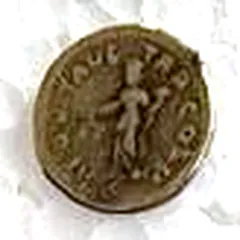
Skip to content
Imperivm ArtRome · Via Cavour 280 Italiano

Declared replica · not an ancient coin

Fourteen coins, fourteen stories

Roman coin and sestertius replicas in Rome

We sell replicas, not genuine ancient coins.

€10 to €25 · Only in our shop at Via Cavour 280 · not sold online

At Imperivm Art, Via Cavour 280, Rome, a five-minute walk from the Colosseum, you can buy replica Roman coins and sestertii: open every day from 10 am to 8 pm. Small ones cost €10; medium and large ones €15 bronze-coloured and €20 gold-coloured; the Imperivm Art case, red or blue, is €5 more for any of them. Only in the shop.

Imperivm Art · Roma

See the fourteen coins How to get here

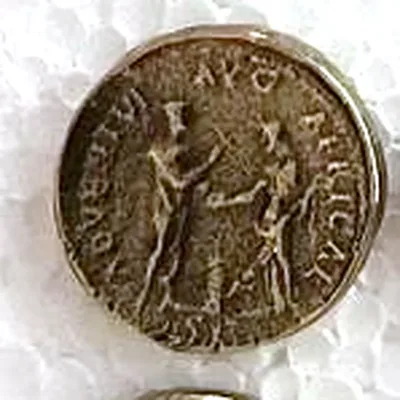
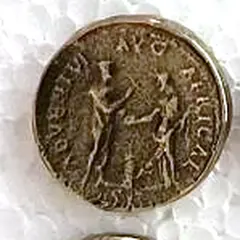
Modern replica of a sestertius of Hadrian, the scene: Hadrian and Africa either side of an altar; AVG and AFRICAE can be read around them, ADVENT… only in traces. Indicative photo of the replica on sale in the shop, gold-coloured.
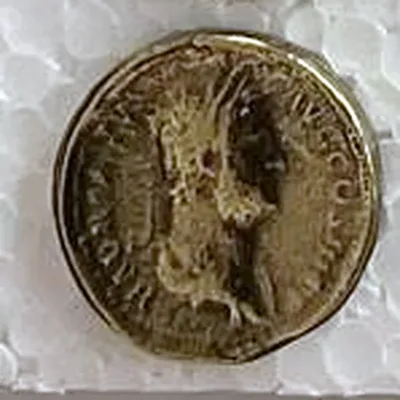
Modern replica of a sestertius of Hadrian, the portrait: Head of Hadrian facing right, probably laureate; …AVG CO… can be read on the right. Indicative photo of the replica on sale in the shop, gold-coloured.
Replica of a sestertius of Hadrian, gold-coloured. Indicative photo of the replica on sale: the piece in the shop may vary in finish.

What they are and what they cost

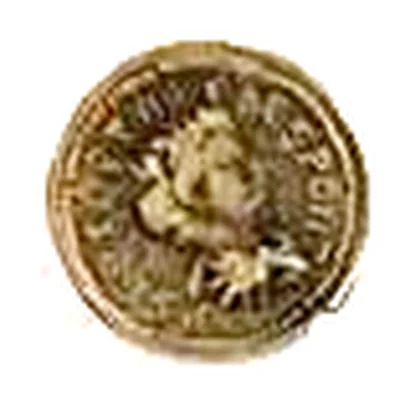
They are modern replicas, made today: they are not ancient coins. They reproduce Roman sestertii and other coins of the Roman and Greek world; for each one we say what the original coin was, even when it was not a sestertius. They come in three sizes, small, medium and large, and in two finishes: bronze-coloured and gold-coloured. The photos on this page are indicative: they show the replicas we sell, and the piece in the shop may vary in finish. Subjects change as they sell: ask at the counter which ones are in today.

The photographs show our replicas, not the original coins. Date, mint and metal are those of the original coin, not of the replica. When the type is not certain we say so; when a coin cannot be identified, we do not give it a name.

Your replica in the Imperivm Art case

The case comes in blue or red, with our logo in gold on the lid; inside it is flocked velvet. You can have it with any replica, small, medium or large: it costs €5 more. In the montage you can see nine of the fourteen replicas: the Constantine of the real photo and the eight large ones.

Blue case, open, blue velvet, with the replica of the portrait on a follis of Constantine as Caesar in the round recess. Real photo, taken in our shop.

Real photo, in our shop

Real photo, in our shop: the blue case with the replica inside, just as we photographed it.

Photo montage: real case and real replica, photographed separately. Size and position are indicative.

Photo montage: the other side, from the maker’s photo. It is a modern side.

Real photo, in our shop: the blue case, closed.

Real photo, in our shop: the red case, closed.

Case colour

1 of 9 · obverse

Constantine, most noble CaesarModern replica of the portrait on a follis of Constantine as Caesar, with a modern side · bronze-coloured
The address to the cohortsModern replica of a sestertius of Caligula · bronze-coloured · indicative photo
The high priest and Vesta’s fireModern replica of an as of Caligula (not a sestertius) · bronze-coloured · indicative photo
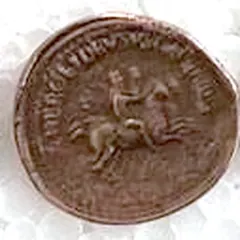
The brothers on horsebackModern replica of a dupondius of Caligula (not a sestertius) · bronze-coloured · indicative photo
Hadrian arrives in AfricaModern replica of a sestertius of Hadrian · gold-coloured · indicative photo
An emperor far from RomeModern replica of a coin of Maximinus Thrax · bronze-coloured · indicative photo
A figure without a nameModern replica of a Roman bronze coin, not identified · gold-coloured · indicative photo
Fashion in the hairModern replica of a Roman bronze coin with a woman’s portrait, not identified · bronze-coloured · indicative photo
Arethusa and the prizes of the raceModern replica of a Greek decadrachm of Syracuse (not a sestertius) · gold-coloured · indicative photo

Tap or click the coin to turn it over; swipe sideways or use the arrows ‹ › to change replica.

With the keyboard: arrows ← → to change replica.

The fourteen coins in order of time

Scroll the timeline and tap a coin to go to its card. Above each name are the years: of the reign for Caligula, Hadrian and Maximinus, of the coin for the others. For the three coins without a name the date cannot be determined.

  1. about 405–390 BC

    Before Rome: Syracuse

    A Greek silver decadrachm, not a sestertius ANS 1997.9.64 ANS 1997.9.77

  2. 100 BC

    Republic: P. Servilius Rullus

    A silver denarius struck by a moneyer of the Republic CRRO, RRC 328/1

  3. AD 37–41

    Caligula

    Three coins struck in Rome in 37–38 Nomisma.org, Caligula

  4. AD 71–78

    Vespasian

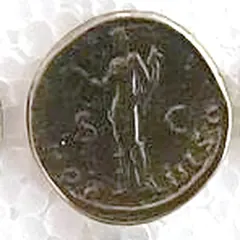
    A sestertius with the goddess Roma, struck in these years OCRE, Vespasian ROMA S C

  5. AD 103–111

    Trajan

    The portrait of a dupondius of these years; the other side of the replica is modern OCRE, dupondii of Trajan

  6. AD 117–138

    Hadrian

    A sestertius struck in Rome between 130 and 133 Nomisma.org, Hadrian

  7. AD 235–238

    Maximinus Thrax

    A portrait: the type is similar to the sestertii of 236–238 Nomisma.org, Maximinus

  8. AD 240–244

    Gordian III

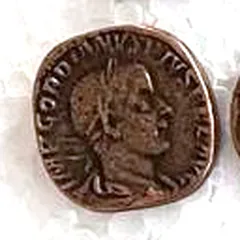
    A sestertius of these years OCRE, Gordian III

  9. AD 306–308

    Constantine as Caesar

    The portrait of a follis of these years; the other side of the replica is modern OCRE, Constantine as Caesar

  10. Date cannot be determined

    Without a name

    Three Roman coins: on the replicas the legend is worn away or uncertain

How to use it

  • Tap a coin, or the ↻ button next to it, to see the other side.
  • Tap an item in the list under the coin: its number appears on the photo, in the right spot.
  • “Read more” opens the doubts, the catalogue reference and the sources of each coin.
  • With a keyboard: the ← and → keys take you to the previous or next coin.

The large replicas

Eight replicas, the largest: they fit in the Imperivm Art case.

Type recognised Coin 1 of 14 · large series

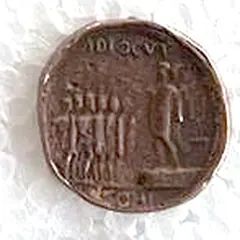
The address to the cohorts: Modern replica of a sestertius of Caligula

An emperor in a toga, on a platform, speaks to his soldiers.
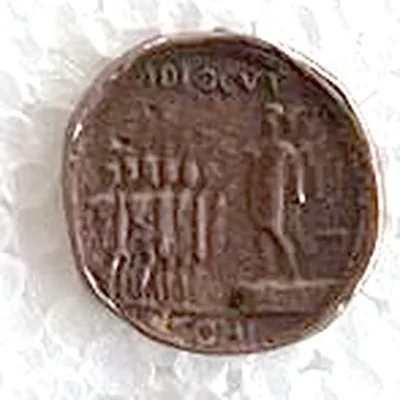
Modern replica of a sestertius of Caligula, the scene: The emperor on a platform addresses five soldiers with shields and eagles; ADLOCVT above, COH below. Indicative photo of the replica on sale in the shop, bronze-coloured.
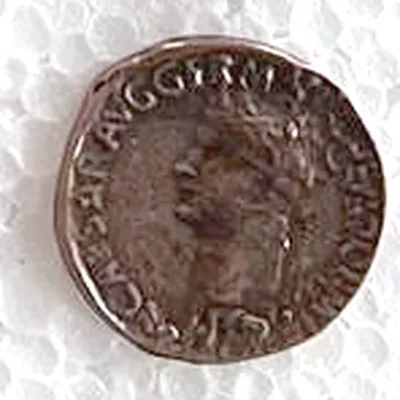
Modern replica of a sestertius of Caligula, the portrait: Laureate head of Caligula, facing left. Of the legend, C CAESAR AVG GERM… and …ANICVS PON M TR P… can be read. Indicative photo of the replica on sale in the shop, bronze-coloured.

Indicative photo of the replica on sale, bronze-coloured: the piece in the shop may vary in finish.

Side shownThe scene

The emperor on a platform addresses five soldiers with shields and eagles; ADLOCVT above, COH below.

On the other sideThe portrait

Laureate head of Caligula, facing left. Of the legend, C CAESAR AVG GERM… and …ANICVS PON M TR P… can be read

In short. The replica reproduces a sestertius of Caligula struck in Rome in AD 37–38, showing the emperor addressing the cohorts (ADLOCVT COH): in the OCRE catalogue it is type RIC I² Gaius 32.

Date of the original
AD 37–38 OCRE, RIC I² Gaius 32
Mint of the original
Rome OCRE, RIC I² Gaius 32
Metal of the original
Orichalcum (ancient brass) Nomisma.org, sestertius

The story

ADLOCVT COH is short for adlocutio cohortium, the address to the cohorts. Caligula, bare-headed and in a toga, stands on a low platform and holds out his hand to five soldiers with helmets and shields; the last ones carry the eagle. The cohorts, in the usual reading, are the praetorians, the emperor’s guard, whom Tiberius had gathered in one camp in Rome. Cassius Dio tells us that as soon as he came to power in 37, Caligula reviewed the praetorians and paid each man the thousand sesterces left by Tiberius, plus another thousand of his own. That the coin recalls that day is a hypothesis.
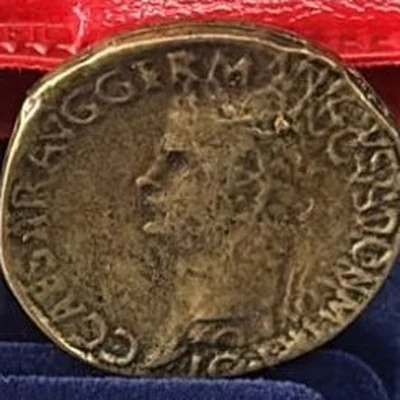
Real photo taken in our shop: gold-coloured replica with the portrait of Caligula facing left and the legend C CAESAR AVG GERMANICVS.
Real photo, in our shop, 16 October 2026: a gold-coloured replica with the portrait of Caligula and the legend C CAESAR AVG GERMANICVS PON M TR POT. That it is this very replica is probable, not certain: a photo of the other side will tell.

Price, for comparison

A genuine sestertius of Caligula with this scene sold at auction for anything from about €300, worn and corroded, to about €17,000 (auctions of 2026, results read on 14 October 2026). CoinArchives, 2026 auctions

Our replica: €15 bronze-coloured, €20 gold-coloured, only in our shop at Via Cavour 280.

Read more: doubts, catalogue and sources

Only in our shop at Via Cavour 280 · not sold online. Bronze-coloured €15, gold-coloured €20; with the case, €5 more · every day 10 am–8 pm · How to get here →
Type recognised Coin 2 of 14 · large series

The high priest and Vesta’s fire: Modern replica of an as of Caligula (not a sestertius)

On one side Rome’s high priest, on the other the goddess of the sacred fire.

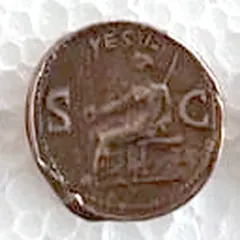
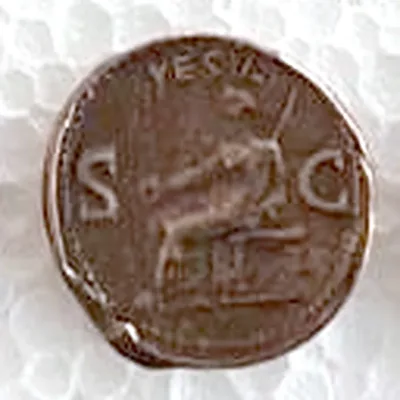
Modern replica of an as of Caligula (not a sestertius), the goddess: Veiled Vesta enthroned with patera and sceptre; VESTA above, S and C either side. Indicative photo of the replica on sale in the shop, bronze-coloured.
Modern replica of an as of Caligula (not a sestertius), the portrait: Bare head of Caligula facing left; AVG GERMANICVS and PON M TR POT can be read around it. Indicative photo of the replica on sale in the shop, bronze-coloured.

Indicative photo of the replica on sale, bronze-coloured: the piece in the shop may vary in finish.

Side shownThe goddess

Veiled Vesta enthroned with patera and sceptre; VESTA above, S and C either side.

On the other sideThe portrait

Bare head of Caligula facing left; AVG GERMANICVS and PON M TR POT can be read around it.

In short. The replica reproduces a copper as of Caligula struck in Rome in AD 37–38, with Vesta enthroned and the word VESTA: in the OCRE catalogue it is type RIC I² Gaius 38. The original is not a sestertius.

Date of the original
AD 37–38 OCRE, RIC I² Gaius 38
Mint of the original
Rome OCRE, RIC I² Gaius 38
Metal of the original
Copper ANS, Introduction to Roman Coinage

The story

Caligula was emperor from 37 to 41. Around his portrait you can read PON M: pontifex maximus, Rome’s high priest, an office held by the emperor. On the other side sits Vesta, veiled, with the offering bowl called a patera and a long sceptre. The Vestals guarded her sacred fire and answered to the pontifex maximus: the historian Livy tells how once the fire went out, and the Vestal on watch that night was flogged on the pontifex’s orders. The original is not a sestertius: it is an as, a copper coin worth a quarter of a sestertius.

Price, for comparison

A genuine as of Caligula with Vesta, in good condition, usually sells at auction for €250 to €700 (auctions of 2026, results reread on 21 October 2026). CoinArchives, 2026 auctions

Our replica: €15 bronze-coloured, €20 gold-coloured, only in our shop at Via Cavour 280.

Read more: doubts, catalogue and sources

Only in our shop at Via Cavour 280 · not sold online. Bronze-coloured €15, gold-coloured €20; with the case, €5 more · every day 10 am–8 pm · How to get here →
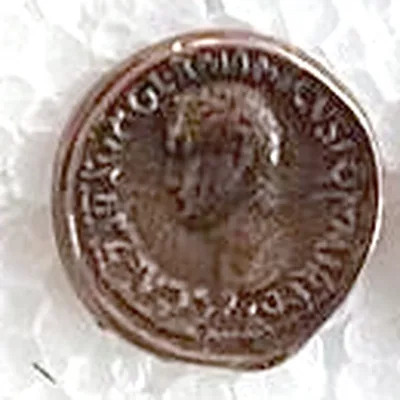
Similar type, not confirmed Coin 3 of 14 · large series

The brothers on horseback: Modern replica of a dupondius of Caligula (not a sestertius)

As soon as he became emperor, Caligula put on his coins the two brothers who had died under Tiberius.

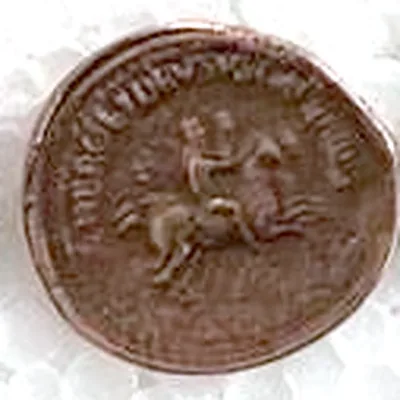
Modern replica of a dupondius of Caligula (not a sestertius), the riders: A horseman galloping right, cloak flying; the double outline suggests two riders. The legend above is barely legible: perhaps …ET DRVSVS… Indicative photo of the replica on sale in the shop, bronze-coloured.
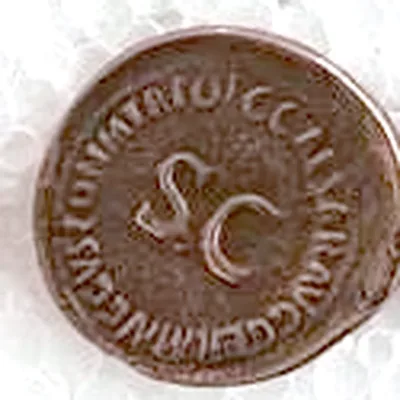
Modern replica of a dupondius of Caligula (not a sestertius), s c and the titles: A large S C in the centre; GERMANICVS and PON M TR POT can be read around it. Indicative photo of the replica on sale in the shop, bronze-coloured.

Indicative photo of the replica on sale, bronze-coloured: the piece in the shop may vary in finish.

Side shownThe riders

A horseman galloping right, cloak flying; the double outline suggests two riders. The legend above is barely legible: perhaps …ET DRVSVS…

On the other sideS C and the titles

A large S C in the centre; GERMANICVS and PON M TR POT can be read around it.

In short. The replica resembles Caligula’s dupondius for his brothers Nero and Drusus, struck in Rome in AD 37–38 (RIC I² Gaius 34): the riders’ legend is barely legible, so the type is “similar”, not confirmed.

Date of the original
AD 37–38 (similar type) OCRE, RIC I² Gaius 34
Mint of the original
Rome OCRE, RIC I² Gaius 34
Metal of the original
Orichalcum (ancient brass); OCRE says “bronze”, in the broad sense ANS, Introduction to Roman Coinage

The story

Nero and Drusus were Caligula’s brothers, sons of Germanicus. Under Tiberius they fell from favour and died: according to Suetonius, Nero on the island of Pontia, Drusus of hunger in a room of the Palace in Rome. In 37 Caligula became emperor and, Suetonius adds, set off at once, in stormy weather, to bring the ashes of his mother and brother back to Rome. In his first year the mint of Rome struck the two brothers galloping, cloaks flying. On the other side, around a large S C, run the emperor’s name and titles.

Read more: doubts, catalogue and sources

Hypotheses and doubts

  • The same S C side also exists on the as struck for Germanicus (RIC 35): it is the horseman that points to the brothers’ dupondius.

Catalogue

Similar to the dupondius RIC I (2nd ed.) Gaius/Caligula 34: NERO ET DRVSVS CAESARES with the two riders; on the other side C CAESAR AVG GERMANICVS PON M TR POT around S C. “Similar” because the riders’ legend is barely visible on the replica.

Sources (6)

  1. OCRE, RIC I (2nd ed.) Gaius/Caligula 34 [S21]
  2. Suetonius, Tiberius 54.2 (Loeb translation on LacusCurtius) [S22]
  3. Suetonius, Caligula 15.1 (Loeb translation on LacusCurtius) [S23]
  4. Nomisma.org, Gaius/Caligula [S25]
  5. American Numismatic Society, An Introduction to Roman Coinage [S26]
  6. Nomisma.org, as and dupondius [S30]

Only in our shop at Via Cavour 280 · not sold online. Bronze-coloured €15, gold-coloured €20; with the case, €5 more · every day 10 am–8 pm · How to get here →
Type recognised Coin 4 of 14 · large series

Hadrian arrives in Africa: Modern replica of a sestertius of Hadrian

A coin worded like a dedication: “to the arrival of the Augustus in Africa”.

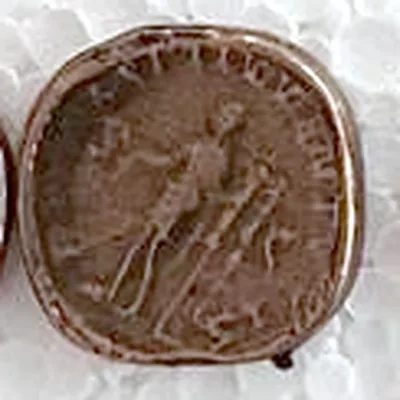
Modern replica of a sestertius of Hadrian, the scene: Hadrian and Africa either side of an altar; AVG and AFRICAE can be read around them, ADVENT… only in traces. Indicative photo of the replica on sale in the shop, gold-coloured.
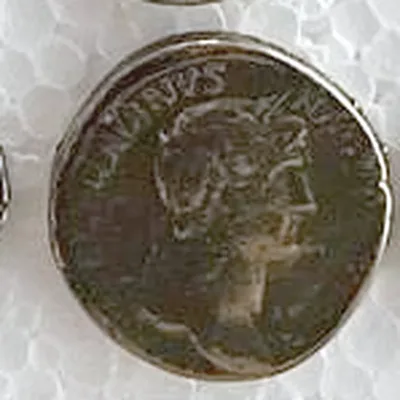
Modern replica of a sestertius of Hadrian, the portrait: Head of Hadrian facing right, probably laureate; …AVG CO… can be read on the right. Indicative photo of the replica on sale in the shop, gold-coloured.

Indicative photo of the replica on sale, gold-coloured: the piece in the shop may vary in finish.

Side shownThe scene

Hadrian and Africa either side of an altar; AVG and AFRICAE can be read around them, ADVENT… only in traces.

On the other sideThe portrait

Head of Hadrian facing right, probably laureate; …AVG CO… can be read on the right

In short. The replica reproduces a sestertius of Hadrian struck in Rome between AD 130 and 133, reading ADVENTVI AVG AFRICAE, “to the arrival of the Augustus in Africa”: type RIC II.3 Hadrian 1715–1719, 1721–1722 and 1725.

Date of the original
AD 130–133 OCRE, RIC II.3 Hadrian 1715
Mint of the original
Rome OCRE, RIC II.3 Hadrian 1715
Metal of the original
Orichalcum (ancient brass) OCRE, RIC II.3 Hadrian 1715

The story

Hadrian ruled from 117 to 138 and spent years travelling the empire. In the summer of 128 he was in Africa: at Lambaesis, in today’s Algeria, he inspected the legion, and his speeches to the soldiers were carved in stone. According to the Historia Augusta, a late and not always reliable source, it rained on his arrival for the first time in five years. A few years later, between 130 and 133, the mint of Rome struck this scene: Hadrian facing Africa, who wears an elephant scalp, with an altar between them. ADVENTVI is a dative: the coin is dedicated to his arrival.

Price, for comparison

A genuine sestertius of Hadrian in good condition sells at auction for around €250, often more (auctions of 2026, results reread on 21 October 2026). CoinArchives, 2026 auctions

Our replica: €15 bronze-coloured, €20 gold-coloured, only in our shop at Via Cavour 280.

Read more: doubts, catalogue and sources

In our catalogue: the statue of Emperor Hadrian →

Only in our shop at Via Cavour 280 · not sold online. Bronze-coloured €15, gold-coloured €20; with the case, €5 more · every day 10 am–8 pm · How to get here →
Portrait recognised, other side uncertain Coin 5 of 14 · large series

An emperor far from Rome: Modern replica of a coin of Maximinus Thrax

Emperor for three years, he never entered Rome: his coins and his paintings did.

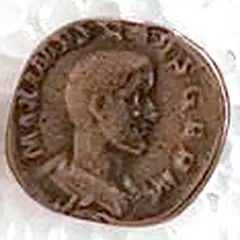
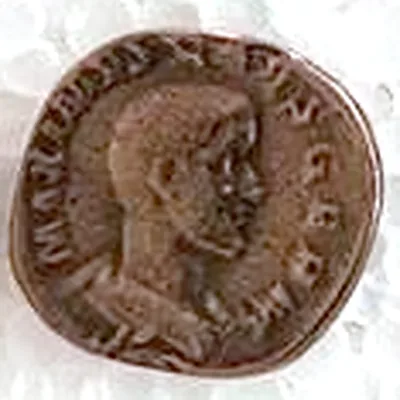
Modern replica of a coin of Maximinus Thrax, the portrait: Bust of Maximinus facing right, hair cropped very short; MAXIMINVS and PIVS AVG can be read, perhaps GERM. Indicative photo of the replica on sale in the shop, bronze-coloured.
Modern replica of a coin of Maximinus Thrax, the standards: A standing figure beside military standards; the legend above cannot be read. Indicative photo of the replica on sale in the shop, bronze-coloured.

Indicative photo of the replica on sale, bronze-coloured: the piece in the shop may vary in finish.

Side shownThe portrait

Bust of Maximinus facing right, hair cropped very short; MAXIMINVS and PIVS AVG can be read, perhaps GERM.

On the other sideThe standards

A standing figure beside military standards; the legend above cannot be read.

In short. The portrait on the replica is Maximinus Thrax, emperor from 235 to 238: MAXIMINVS and PIVS AVG can be read. It resembles his sestertii struck in Rome in 236–238; the other side, with military standards, cannot be read.

Date of the original
AD 236–238 (similar type) OCRE, RIC IV Maximinus 78
Mint of the original
Rome OCRE, RIC IV Maximinus 78
Metal of the original
Bronze (copper alloy) OCRE, RIC IV Maximinus 78

The story

Maximinus was proclaimed emperor by his soldiers in 235, at the army headquarters near Mainz, on the Rhine. He stayed with the army: in Germany, then in Pannonia. The historian Herodian tells us that he had his battle in Germany painted on huge canvases and set up in front of the Senate house, so that the Romans could see it and not only hear about it. Later the Senate had them taken down. In 238 he marched on Rome, but was held up at the siege of Aquileia, where soldiers of one of his legions killed him. As emperor, he never reached Rome.

Read more: doubts, catalogue and sources

Hypotheses and doubts

  • That the side with the standards belongs to the same coin as the portrait is not proven: only the position in the sample photo suggests it.

Catalogue

Similar to the sestertii of Maximinus reading MAXIMINVS PIVS AVG GERM, Rome, 236–238 (for example RIC IV 78). The side with the standards resembles RIC IV 78 (Fides holding a standard in each hand) or RIC IV 37 (the emperor between standards): not settled.

Sources (5)

  1. Nomisma.org, Maximinus Thrax [S08]
  2. De Imperatoribus Romanis, Maximinus Thrax (M. L. Meckler, Ohio State University) [S12]
  3. Herodian, History of the Empire 7.2.8–9 (trans. E. C. Echols, on Livius.org) [S13]
  4. OCRE, RIC IV Maximinus 78 [S09]
  5. OCRE, RIC IV Maximinus 37 [S10]

Only in our shop at Via Cavour 280 · not sold online. Bronze-coloured €15, gold-coloured €20; with the case, €5 more · every day 10 am–8 pm · How to get here →
Not identified Coin 6 of 14 · large series

A figure without a name: Modern replica of a Roman bronze coin, not identified

Two letters are easy to read, S and C; the rest of the legend is worn away on the replica.

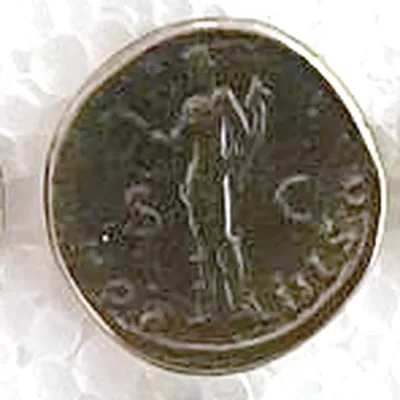
Modern replica of a Roman bronze coin, not identified, the figure: A standing female figure with a long sceptre, S and C either side. Indicative photo of the replica on sale in the shop, gold-coloured.
Modern replica of a Roman bronze coin, not identified, the portrait: Male head facing right, perhaps laureate; of the legend only …ANVS remains. Indicative photo of the replica on sale in the shop, gold-coloured.

Indicative photo of the replica on sale, gold-coloured: the piece in the shop may vary in finish.

Side shownThe figure

A standing female figure with a long sceptre, S and C either side.

On the other sideThe portrait

Male head facing right, perhaps laureate; of the legend only …ANVS remains.

In short. Replica of an unidentified Roman bronze coin: a female figure with a sceptre between the letters S C, short for senatus consulto, “by decree of the Senate”. Only …ANVS remains of the name: we give neither a name nor a date.

Date of the original
Cannot be determined
Mint of the original
Cannot be determined
Metal of the original
Copper alloy (Roman bronze with S C) ANS, Introduction to Roman Coinage

The story

S C stands for senatus consulto, “by decree of the Senate”. On Roman copper, bronze and brass coins of the early Empire these two letters appear again and again; what exactly they meant is still debated by scholars. Here, next to S C, a woman stands holding a long sceptre. On Roman coins it is usually the legend around a figure that tells you who she is: VESTA, for example, or PAX AVGVSTI for Peace. Many figures hold a sceptre, Vesta on Caligula’s coins and Peace on those of Maximinus. On the replica the legend is worn away: we will not invent her name.

Read more: doubts, catalogue and sources

Hypotheses and doubts

  • Some may think of Hadrian because of …ANVS: we do not write it, because many names end that way.
  • That the two sides belong to the same coin is not proven: only the position in the sample photo suggests it.

Catalogue

Not identified. On the portrait …ANVS can just be seen, on the other side perhaps COS III: too little for a name or a date.

Sources (4)

  1. J. Williams (curator of Roman coins at the British Museum, 1993–2005), The Republican identity of Roman imperial coinage, ICOMON, Hanover 2007, pp. 57–72 [S05]
  2. American Numismatic Society, An Introduction to Roman Coinage [S26]
  3. OCRE, RIC I (2nd ed.) Gaius/Caligula 38 [S27]
  4. OCRE, search for sestertii of Maximinus reading MAXIMINVS PIVS AVG GERM [S11]

Only in our shop at Via Cavour 280 · not sold online. Bronze-coloured €15, gold-coloured €20; with the case, €5 more · every day 10 am–8 pm · How to get here →
Not identified Coin 7 of 14 · large series

Fashion in the hair: Modern replica of a Roman bronze coin with a woman’s portrait, not identified

Her name cannot be read, but her hair tells of the fashion at court.

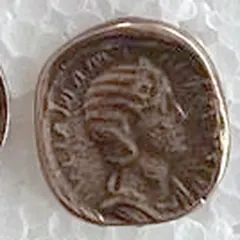
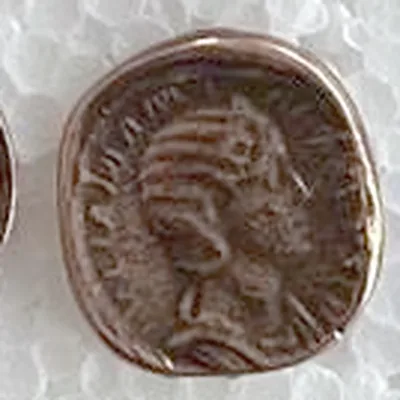
Modern replica of a Roman bronze coin with a woman’s portrait, not identified, the portrait: Bust of a woman facing right, hair in horizontal waves with a bun at the nape; no legible letters. Indicative photo of the replica on sale in the shop, bronze-coloured.
Modern replica of a Roman bronze coin with a woman’s portrait, not identified, the figure: A standing figure with a long staff and outstretched arm, between S and C. Indicative photo of the replica on sale in the shop, bronze-coloured.

Indicative photo of the replica on sale, bronze-coloured: the piece in the shop may vary in finish.

Side shownThe portrait

Bust of a woman facing right, hair in horizontal waves with a bun at the nape; no legible letters.

On the other sideThe figure

A standing figure with a long staff and outstretched arm, between S and C.

In short. Replica of a Roman bronze coin with a woman’s portrait, not identified: no letter of her name can be read, and on this page we do not give her one.

Date of the original
Cannot be determined
Mint of the original
Cannot be determined
Metal of the original
Copper alloy (Roman bronze with S C) ANS, Introduction to Roman Coinage

The story

The hairstyles of women at the imperial court changed often and are well documented. That is why, the Metropolitan Museum in New York explains, portraits of unknown women can be dated by their hair: a girl carved in marble wears a hairstyle very similar to that of Domitia, wife of the emperor Domitian, as she appears on coins of the early 80s AD. On this replica the woman portrayed has horizontal waves and a bun at the nape of the neck. On the other side a figure stands with a long staff, between S and C. The legend is worn: her name remains unknown, and we will not invent one.

Read more: doubts, catalogue and sources

Hypotheses and doubts

  • The waved hairstyle recalls third-century fashions, but without a legend we do not state it as fact.
  • That the two sides belong to the same coin is not proven: only the position in the sample photo suggests it.

Catalogue

Not identified. No letter of the name can be read; we give neither a name nor a date.

Sources (3)

  1. The Metropolitan Museum of Art 20.188, Marble portrait of a young girl (AD 81–96) [S39]
  2. J. Paul Getty Museum, Mummy Portraits of Roman Egypt, glossary [S40]
  3. American Numismatic Society, An Introduction to Roman Coinage [S26]

Only in our shop at Via Cavour 280 · not sold online. Bronze-coloured €15, gold-coloured €20; with the case, €5 more · every day 10 am–8 pm · How to get here →
Similar type, not confirmed Coin 8 of 14 · large series

Arethusa and the prizes of the race: Modern replica of a Greek decadrachm of Syracuse (not a sestertius)

It isn’t Roman: the original is a large Greek silver decadrachm, struck in Syracuse more than 2,400 years ago.

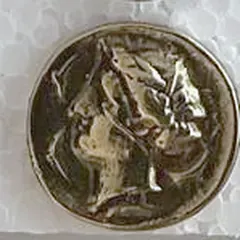
Modern replica of a Greek decadrachm of Syracuse (not a sestertius), arethusa: Head of Arethusa facing left, with a wreath of leaves; no legible letters. Indicative photo of the replica on sale in the shop, gold-coloured.
Modern replica of a Greek decadrachm of Syracuse (not a sestertius), the quadriga: A quadriga galloping left, a flying Victory above the driver and arms below the line; no legible letters. Indicative photo of the replica on sale in the shop, gold-coloured.

Indicative photo of the replica on sale, gold-coloured: the piece in the shop may vary in finish.

Side shownArethusa

Head of Arethusa facing left, with a wreath of leaves; no legible letters.

On the other sideThe quadriga

A quadriga galloping left, a flying Victory above the driver and arms below the line; no legible letters.

In short. The replica resembles the silver decadrachms of Syracuse with Arethusa and the quadriga, struck around 405–390 BC and weighing about 43 grams: it is a Greek coin, not a sestertius.

Date of the original
about 405–390 BC ANS 1997.9.64 ANS 1997.9.77
Mint of the original
Syracuse, Sicily ANS 1997.9.64
Metal of the original
Silver ANS 1997.9.64

The story

On one side is Arethusa. In Ovid’s Metamorphoses she is a nymph chased by the river god Alpheus: she turns into water and, through the earth opened by Diana, rises again on the island of Ortygia, in Syracuse. The Fountain of Arethusa can still be visited there, facing the sea. On the original, four dolphins swim around her head. On the other side a four-horse chariot gallops and a flying Victory crowns the driver. Below lies a full set of armour with the word ATHLA, “prizes”: these were the prizes of the race. A decadrachm was worth ten drachms and weighed about 43 grams of silver. Some carry the engraver’s signature, Euainetos.

Real photo taken in our shop: gold-coloured replica with the head of Arethusa facing left, wearing a wreath of leaves, with dolphins around.
Real photo, in our shop, 16 October 2026: a gold-coloured replica with the head of Arethusa and the dolphins, turned upright (it was lying on its side). That it is this very replica is probable, not certain: a photo of the other side will tell.
Read more: doubts, catalogue and sources

Hypotheses and doubts

  • Museums call the quadriga side the “obverse” (ANS, Harvard); other catalogues do the opposite. On the page we write “one side” and “the other side”.

Catalogue

Similar to the silver decadrachms of Syracuse signed by Euainetos (American Numismatic Society 1997.9.64, 405–400 BC, and 1997.9.77, 400–390 BC). No letters can be read on the replica, so we do not say which die it copies.

Sources (7)

  1. American Numismatic Society, decadrachm of Syracuse 1997.9.64 [S14]
  2. American Numismatic Society, decadrachm of Syracuse 1997.9.77 [S15]
  3. Harvard Art Museums 1.1965.883, Decadrachm of Syracuse, by Euainetos [S16]
  4. Ovid, Metamorphoses 5.572–641 (Latin text on Perseus) [S17]
  5. italia.it (Italian Ministry of Tourism), Fonte Aretusa [S18]
  6. Liddell–Scott–Jones, entry ἆθλον (on lsj.gr) [S19]
  7. Nomisma.org, decadrachm [S20]

Only in our shop at Via Cavour 280 · not sold online. Bronze-coloured €15, gold-coloured €20; with the case, €5 more · every day 10 am–8 pm · How to get here →
The medium replicas

Four replicas, a little smaller than the large ones: they fit in the Imperivm Art case too. Two have a modern side, with a present-day inscription: the card says so.

Type recognised Coin 9 of 14 · medium series

Roma holding Victory: Modern replica of a sestertius of Vespasian

A goddess in a helmet, standing: she is Roma, and on her outstretched hand stands a small Victory.

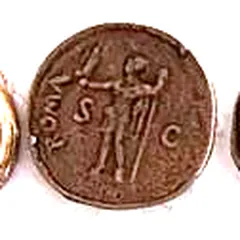
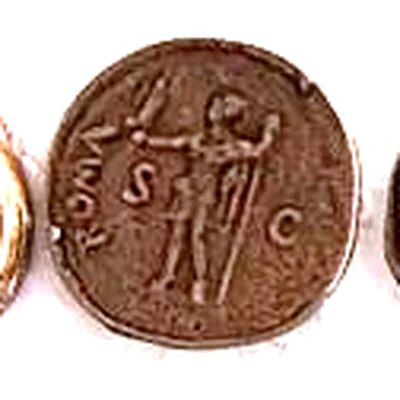
Modern replica of a sestertius of Vespasian, the goddess roma: Roma in a helmet, standing, with a spear and a small Victory on her hand; ROMA on the left, S and C on either side. Indicative photo of the replica on sale in the shop, bronze-coloured.
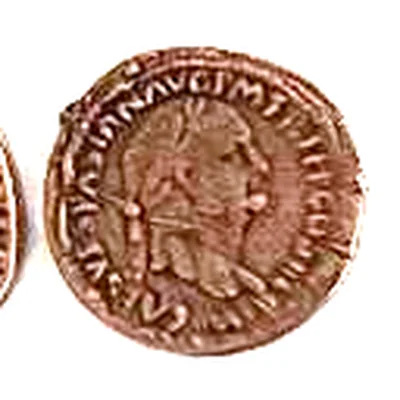
Modern replica of a sestertius of Vespasian, the portrait: Head of Vespasian with a laurel wreath, facing right; CAES VESPASIAN AVG P M TR can be read. Indicative photo of the replica on sale in the shop, bronze-coloured.

Indicative photo of the replica on sale, bronze-coloured: the piece in the shop may vary in finish.

Side shownThe goddess Roma

Roma in a helmet, standing, with a spear and a small Victory on her hand; ROMA on the left, S and C on either side.

On the other sideThe portrait

Head of Vespasian with a laurel wreath, facing right; CAES VESPASIAN AVG P M TR can be read.

In short. The replica copies a sestertius of Vespasian with the goddess Roma standing, holding Victory and a spear (ROMA S C): a type struck between AD 71 and 78, for example RIC II.1² Vespasian 191.

Date of the original
AD 71–78 OCRE, Vespasian ROMA S C
Mint of the original
Rome or Lyon OCRE, Vespasian ROMA S C
Metal of the original
Orichalcum (ancient brass) Nomisma.org, sestertius

The story

The replica copies a sestertius of Vespasian. On one side is his head with a laurel wreath and, around it, his name and titles: on the replica you can read CAES VESPASIAN AVG P M TR. On the other side is the goddess Roma in a helmet, standing, with a spear and a small Victory on her outstretched hand, between the word ROMA and the letters S C. Sestertii with this scene were struck between AD 71 and 78. The number of the consulship, at the end of the legend, cannot be read on the replica: that is why we do not give a single catalogue number.

Read more: doubts, catalogue and sources

Hypotheses and doubts

  • Titus also has a sestertius with ROMA S C, but with Roma seated: here Roma is standing, and VESPASIAN AVG P M can be read on the portrait.

Catalogue

Type RIC II.1 (2nd ed.) Vespasian 191 (sestertius, Rome, AD 71) and similar (815, 994, 1136): the same legend and the goddess Roma standing with Victory and a spear. The number of the consulship cannot be read, so we do not choose a single number.

Sources (3)

  1. OCRE, RIC II.1 (2nd ed.) Vespasian 191 [S55]
  2. OCRE, Vespasian with ROMA S C (search) [S56]
  3. Nomisma.org, sestertius [S29]

Only in our shop at Via Cavour 280 · not sold online. Bronze-coloured €15, gold-coloured €20; with the case, €5 more · every day 10 am–8 pm · How to get here →
Portrait recognised, the other side is modern Coin 10 of 14 · medium series

Trajan with a radiate crown: Modern replica of the portrait on a dupondius of Trajan, with a modern side

One side copies an ancient coin; the other is a modern inscription.

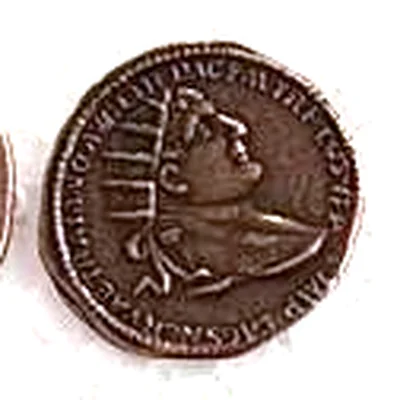
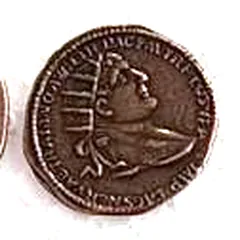
Modern replica of the portrait on a dupondius of Trajan, with a modern side, the portrait: Bust of Trajan with a radiate crown, facing right; around it, IMP CAES NERVAE TRAIANO AVG GER DAC P M TR P COS V P P. Indicative photo of the replica on sale in the shop, bronze-coloured.
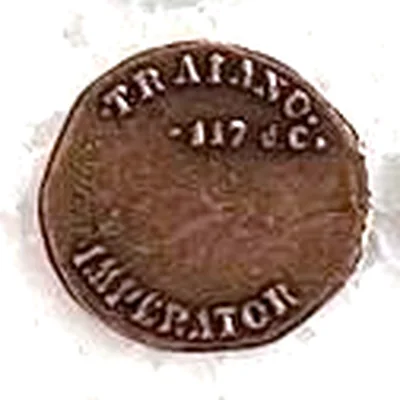
Modern replica of the portrait on a dupondius of Trajan, with a modern side, the modern side: A modern inscription, TRAIANO · 117 d.C. · IMPERATOR: it copies no ancient coin. Indicative photo of the replica on sale in the shop, bronze-coloured.

Indicative photo of the replica on sale, bronze-coloured: the piece in the shop may vary in finish.

Side shownThe portrait

Bust of Trajan with a radiate crown, facing right; around it, IMP CAES NERVAE TRAIANO AVG GER DAC P M TR P COS V P P.

On the other sideThe modern side

A modern inscription, TRAIANO · 117 d.C. · IMPERATOR: it copies no ancient coin.

In short. The portrait copies a dupondius of Trajan struck in Rome between AD 103 and 111; the other side of the replica is a modern inscription, “TRAIANO 117 d.C. IMPERATOR”, and copies no ancient coin.

Date of the original
AD 103–111 (the portrait) OCRE, dupondii of Trajan
Mint of the original
Rome OCRE, dupondii of Trajan
Metal of the original
Orichalcum (ancient brass) ANS, Introduction to Roman Coinage

The story

The portrait on this replica copies a dupondius of Trajan: the bust with a radiate crown and the legend IMP CAES NERVAE TRAIANO AVG GER DAC P M TR P COS V P P. The OCRE catalogue lists 41 types of dupondius with this legend, struck in Rome between AD 103 and 111, almost all with the radiate crown. The other side of the replica copies no ancient coin: it is a modern inscription, “TRAIANO 117 d.C. IMPERATOR”.

Read more: doubts, catalogue and sources

Hypotheses and doubts

  • In the maker’s photo the modern side of the Trajan is shown only bronze-coloured; in gold colour there is the portrait.

Catalogue

The portrait: one of the 41 types of dupondius of Trajan reading IMP CAES NERVAE TRAIANO AVG GER DAC P M TR P COS V P P (RIC II Trajan 460–516 approx., Rome, AD 103–111). The other side is modern: it has no catalogue number.

Sources (2)

  1. OCRE, dupondii of Trajan reading IMP CAES NERVAE TRAIANO AVG GER DAC P M TR P COS V P P [S57]
  2. American Numismatic Society, An Introduction to Roman Coinage [S26]

Only in our shop at Via Cavour 280 · not sold online. Bronze-coloured €15, gold-coloured €20; with the case, €5 more · every day 10 am–8 pm · How to get here →
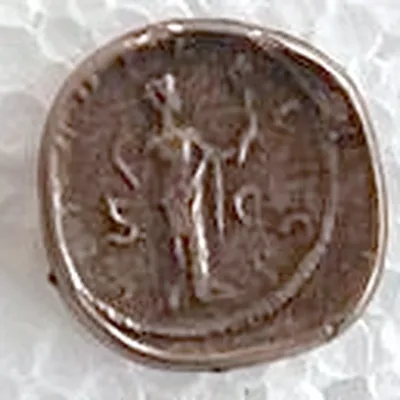
Portrait recognised, other side probable Coin 11 of 14 · medium series

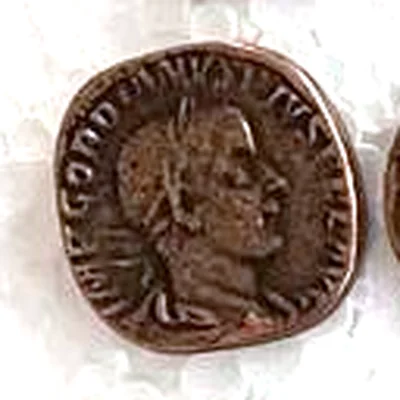
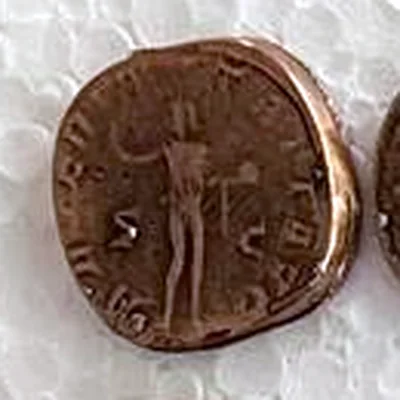
Gordian III and the raised hand: Modern replica of a sestertius of Gordian III

The portrait is certain; the naked man raising his hand on the other side is probably the Sun god.

Modern replica of a sestertius of Gordian III, the portrait: Bust of Gordian III with a laurel wreath, drapery and cuirass, facing right; IMP GORDIANVS PIVS FEL AVG can be read. Indicative photo of the replica on sale in the shop, bronze-coloured.
Modern replica of a sestertius of Gordian III, the figure raising a hand: A naked man stands raising his right hand; perhaps a globe in his left; S and C on either side. The legend around it cannot be read. Indicative photo of the replica on sale in the shop, bronze-coloured.

Indicative photo of the replica on sale, bronze-coloured: the piece in the shop may vary in finish.

Side shownThe portrait

Bust of Gordian III with a laurel wreath, drapery and cuirass, facing right; IMP GORDIANVS PIVS FEL AVG can be read.

On the other sideThe figure raising a hand

A naked man stands raising his right hand; perhaps a globe in his left; S and C on either side. The legend around it cannot be read.

In short. The portrait is Gordian III (IMP GORDIANVS PIVS FEL AVG), as on his sestertii of AD 240–244; on the other side a naked man raising his hand, probably the Sun god.

Date of the original
AD 240–244 (the portrait) OCRE, Gordian III
Original coin
Sestertius OCRE, Gordian III

The story

The replica copies a sestertius of Gordian III. The portrait wears a laurel wreath, drapery and a cuirass, with the legend IMP GORDIANVS PIVS FEL AVG: the OCRE catalogue lists 14 types of sestertius with this legend, struck between AD 240 and 244. On the other side a naked man stands, raising his right hand and perhaps holding a globe in his left, between the letters S and C. Gordian III has a sestertius like this, with the Sun god and the legend AETERNITATI AVG; on the replica, however, the legend on this side cannot be read, so it is probable, not certain.

Read more: doubts, catalogue and sources

Hypotheses and doubts

  • That the figure is the Sun god is probable, not certain: the legend on that side cannot be read on the replica.
  • That the two sides belong to the same coin is suggested by their position in the maker’s photo; the Sun type is consistent with the portrait.

Catalogue

Portrait: sestertii of Gordian III reading IMP GORDIANVS PIVS FEL AVG (OCRE, 14 types, AD 240–244). The other side resembles RIC IV 297a (AETERNITATI AVG, Sol standing, raising his right hand and holding a globe), but the legend cannot be read.

Sources (3)

  1. OCRE, sestertii of Gordian III reading IMP GORDIANVS PIVS FEL AVG [S53]
  2. Wildwinds, Gordian III RIC IV 297a (CNG specimen, sale 26) [S54]
  3. American Numismatic Society, An Introduction to Roman Coinage [S26]

Only in our shop at Via Cavour 280 · not sold online. Bronze-coloured €15, gold-coloured €20; with the case, €5 more · every day 10 am–8 pm · How to get here →
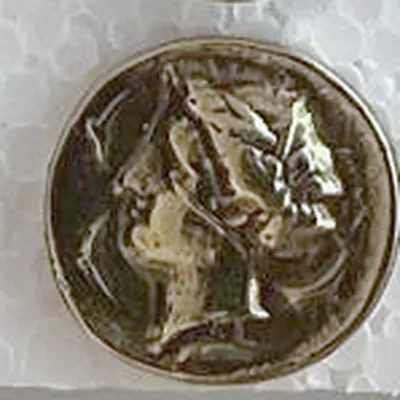
Portrait recognised, the other side is modern Coin 12 of 14 · medium series

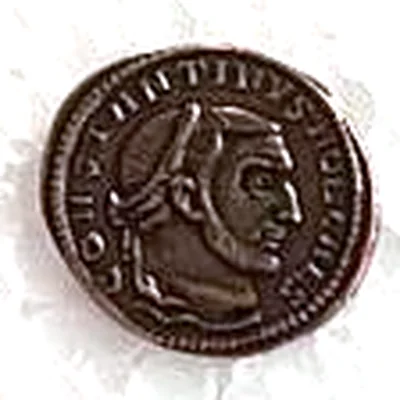
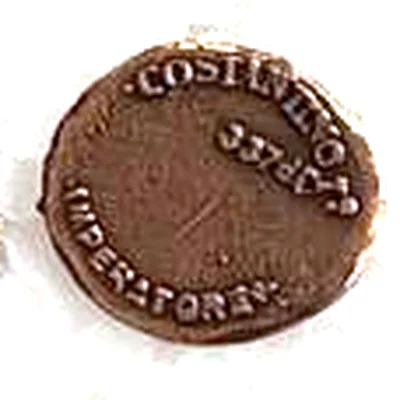
Constantine, most noble Caesar: Modern replica of the portrait on a follis of Constantine as Caesar, with a modern side

It is the replica in the blue case in our photo: one side copies an ancient coin, the other is a modern inscription.

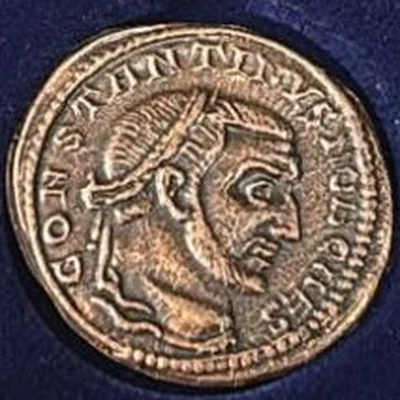
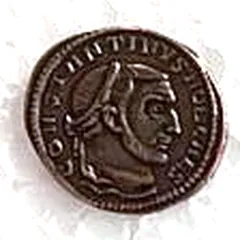
Modern replica of the portrait on a follis of Constantine as Caesar, with a modern side, the portrait: Head of Constantine with a laurel wreath, facing right; around it, CONSTANTINVS NOB CAES. Indicative photo of the replica on sale in the shop, bronze-coloured.
Modern replica of the portrait on a follis of Constantine as Caesar, with a modern side, the modern side: A modern inscription in Italian, COSTANTINO · 337 d.C. · IMPERATORE: it copies no ancient coin. Indicative photo of the replica on sale in the shop, bronze-coloured.

Indicative photo of the replica on sale, bronze-coloured: the piece in the shop may vary in finish.

Side shownThe portrait

Head of Constantine with a laurel wreath, facing right; around it, CONSTANTINVS NOB CAES.

On the other sideThe modern side

A modern inscription in Italian, COSTANTINO · 337 d.C. · IMPERATORE: it copies no ancient coin.

In short. The portrait copies a bronze follis of Constantine while he was still Caesar, AD 306–308 (CONSTANTINVS NOB CAES); the other side of the replica is a modern inscription in Italian, “COSTANTINO 337 d.C. IMPERATORE”.

Date of the original
AD 306–308 OCRE, Constantine as Caesar
Mint of the original
Ticinum (Pavia), Aquileia, Rome or Carthage OCRE, Constantine as Caesar
Metal of the original
Bronze OCRE, Constantine as Caesar

The story

This replica copies the portrait on a bronze coin struck between AD 306 and 308. Around it runs CONSTANTINVS NOB CAES, “Constantine, most noble Caesar”. In 306, after his father Constantius died, the emperor Galerius accepted Constantine only as Caesar, the junior rank: he would become Augustus later. Bronze coins with this legend and a laurel-wreathed head were struck at Ticinum (Pavia), Aquileia, Rome and Carthage. In the maker’s photo the other side copies no ancient coin: it is a modern inscription in Italian, “COSTANTINO 337 d.C. IMPERATORE”, the year he died.

Real photo taken in our shop: the bronze-coloured replica of the portrait of Constantine as Caesar, with the legend CONSTANTINVS NOB CAES, in the blue case.
Real photo, in our shop, 16 October 2026: this replica in the blue case, portrait side, bronze-coloured.
Read more: doubts, catalogue and sources

Hypotheses and doubts

  • The least certain letter is the N of CONSTANTINVS, the one that separates Constantine from his father Constantius (CONSTANTIVS NOB CAES): the spacing of the letters and the modern inscription “COSTANTINO” point to Constantine.
  • We photographed the replica in the blue case in the shop only on the portrait side: that the other side is the modern inscription is shown by the maker’s photo.

Catalogue

Portrait with CONSTANTINVS NOB CAES and a laureate head right: folles of 306–308, for example RIC VI Aquileia 92b and RIC VI Rome 160. The ancient reverse changes from mint to mint and the replica copies none of them: that is why no single number can be given. The other side of the replica is modern. “Follis” is the usual name; OCRE calls them AE1 and AE2.

Sources (7)

  1. OCRE, search for the legend CONSTANTINVS NOB CAES [S46]
  2. OCRE, RIC VI Aquileia 92b [S47]
  3. OCRE, RIC VI Rome 160 [S48]
  4. De Imperatoribus Romanis, Galerius (M. DiMaio) [S49]
  5. Nomisma.org, Constantine I [S50]
  6. Australian National University, Classics Museum 1986.17 [S51]
  7. OCRE, search for the legend IMP CONSTANTINVS P F AVG [S58]

Only in our shop at Via Cavour 280 · not sold online. Bronze-coloured €15, gold-coloured €20; with the case, €5 more · every day 10 am–8 pm · How to get here →
The small replicas

Two replicas, about half the size of the large ones, recently added in the shop. The Imperivm Art case is available with them too.

Type recognised Coin 13 of 14 · small series

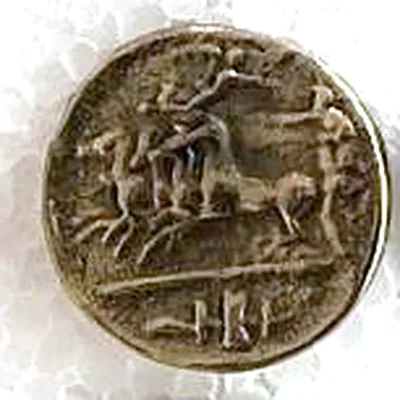
Minerva and Victory in her chariot: Modern replica of a denarius of the Roman Republic

The oldest Roman coin on this page: a silver denarius of the Republic, from 100 BC.

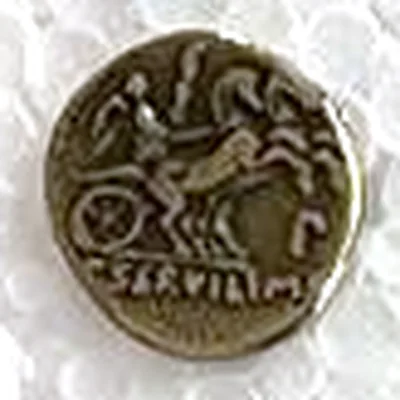
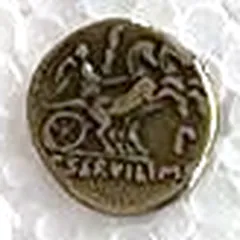
Modern replica of a denarius of the Roman Republic, victory in the biga: Victory in a two-horse chariot, moving right; below, SERVILI M. Indicative photo of the replica on sale in the shop, gold-coloured.
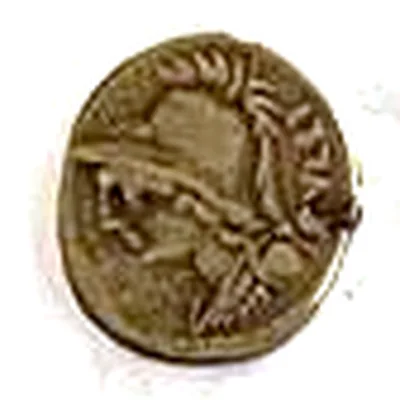
Modern replica of a denarius of the Roman Republic, minerva: Bust of Minerva in a crested Corinthian helmet, facing left; the legend cannot be read. Indicative photo of the replica on sale in the shop, gold-coloured.

Indicative photo of the replica on sale, gold-coloured: the piece in the shop may vary in finish.

Side shownVictory in the biga

Victory in a two-horse chariot, moving right; below, SERVILI M.

On the other sideMinerva

Bust of Minerva in a crested Corinthian helmet, facing left; the legend cannot be read.

In short. The replica copies a silver denarius of the Roman Republic, struck in 100 BC by P. Servilius Rullus (RRC 328/1): Minerva in a helmet on one side, Victory in a biga on the other.

Date of the original
100 BC CRRO, RRC 328/1
Original coin
Denarius CRRO, RRC 328/1
Metal of the original
Silver CRRO, RRC 328/1

The story

The replica copies a silver denarius of the Roman Republic, struck in 100 BC by the moneyer P. Servilius Rullus. On one side is the bust of Minerva in a Corinthian helmet, facing left; on the other, Victory in a biga, a two-horse chariot, with the name P SERVILI M F below. On the replica you can read SERVILI M: the biga, Minerva facing left and this name appear together only on this type. The original measures 19 to 21 millimetres.

Read more: doubts, catalogue and sources

Hypotheses and doubts

  • On the replica the legend RVLLI, on Minerva’s side, cannot be read: the type is recognised from the biga, Minerva facing left and SERVILI M.

Catalogue

RRC 328/1 (CRRO catalogue of the American Numismatic Society): denarius of P. Servilius Rullus, 100 BC, Minerva in a Corinthian helmet left, RVLLI / Victory in a biga right, P SERVILI M F.

Sources (1)

  1. CRRO (American Numismatic Society), RRC 328/1 [S52]

Only in our shop at Via Cavour 280 · not sold online. €10, bronze- or gold-coloured; with the case, €5 more · every day 10 am–8 pm · How to get here →
Not identified Coin 14 of 14 · small series

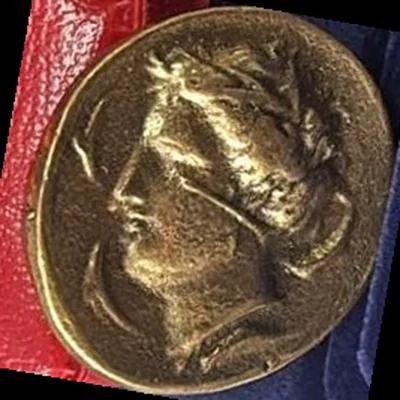
A small coin without a name: Modern replica of a small Roman coin, not identified

Only a fragment of imperial titles can be read: too little for a name.

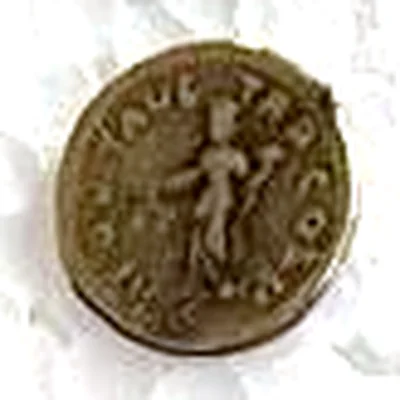
Modern replica of a small Roman coin, not identified, the standing figure: A standing figure holding an object in each hand; around it, uncertain letters: …AVG TR P COS… Indicative photo of the replica on sale in the shop, gold-coloured.
Modern replica of a small Roman coin, not identified, the head: A head facing right, perhaps wreathed; no letters can be read. Indicative photo of the replica on sale in the shop, gold-coloured.

Indicative photo of the replica on sale, gold-coloured: the piece in the shop may vary in finish.

Side shownThe standing figure

A standing figure holding an object in each hand; around it, uncertain letters: …AVG TR P COS…

On the other sideThe head

A head facing right, perhaps wreathed; no letters can be read.

In short. Replica of an unidentified small Roman coin: a head facing right and a standing figure; only an uncertain fragment of the legend remains, …AVG TR P COS…: we give neither a name nor a date.

Date of the original
Cannot be determined

The story

On one side is a head facing right, perhaps wreathed; on the other a standing figure holding an object in each hand. Around the figure you can just make out …AVG TR P COS…, a fragment of imperial titles, but the letters are uncertain and the rest cannot be read. It probably copies a Roman imperial coin; without the name we say neither who it is nor when it was struck.

Read more: doubts, catalogue and sources

Hypotheses and doubts

  • That the two sides belong to the same coin is not proven: only their position in the maker’s photo suggests it.

Catalogue

Not identified. Only …AVG TR P COS… (uncertain) can be read around the standing figure.

Only in our shop at Via Cavour 280 · not sold online. €10, bronze- or gold-coloured; with the case, €5 more · every day 10 am–8 pm · How to get here →
What was a sestertius?

The sestertius was the largest of the bronze coins of the Roman Empire. The name comes from semis tertius, “the third one half”, that is two and a half: at first it was a silver coin worth two and a half asses. From Augustus’s reform it was struck in orichalcum, an alloy like brass, and was worth four asses, a quarter of a denarius. What did that mean? When Augustus died, mutinous legionaries complained of pay of ten asses a day: two and a half sestertii. To sit in the Senate, Augustus had required a fortune of one million two hundred thousand sestertii.

Sources: ANS, Introduction to Roman Coinage · Varro, De lingua Latina 5.173 · Nomisma.org, sestertius · Tacitus, Annals 1.16–17 · Nomisma.org, Augustus · Suetonius, Augustus 41.1

In our catalogue: the Augustus of Prima Porta statue →

And what does a genuine coin cost?

At coin auctions, a genuine Roman sestertius sells for anything from a few tens of euros, when heavily worn, to thousands, when rare and well preserved (auctions of 2026, results reread on 21 October 2026). Ours are replicas, declared as such: €10 to €25 in our shop. CoinArchives, 2026 auctions

Genuine sestertii in good condition sold at auction in 2026
EmperorMiddle half of salesMedianSales counted
Maximinus Thrax€44–133€8042
Hadrian€155–447€26625
Caligula€536–2,011 (all 5 sales)€1,1005

Hammer prices, without the buyer’s premium, which usually adds 15 to 25 per cent; other currencies converted at the European Central Bank rate of 13 October 2026. Read on 14 October 2026: prices change over time. CoinArchives, 2026 auctions

Hold the replicas in your hand at the shop

We sell replicas, not genuine ancient coins.

Imperivm Art · Via Cavour 280, 00184 Rome

A five-minute walk from the Colosseum. Open every day, 10 am to 8 pm.

Only in our shop at Via Cavour 280 · not sold online

Declared replicas of Roman coins and other ancient coins: €10 to €25. The prices ↑

Directions Hours, metro and walking route

Imperivm Art · Roma

The photos and how this page is made

Photographs of the replicas: sample photo of 21 July 2026, taken by the maker of the replicas and shared with us. They are indicative photos of the replicas we sell: the piece in the shop may vary in finish. Imperivm Art only cropped each coin and corrected white balance and light. The photos marked “Real photo, in our shop” (the case and three replicas) were taken by us in the shop on 16 October 2026: only cropped, and the Arethusa one turned upright. No image is generated with artificial intelligence and none comes from a museum. On the page every coin photo is shown small, inside a circle: the background and, in places, the very edge of the coin stay outside the circle. Only the social-media preview image shows the two sides of the Hadrian replica cropped to the same circle, on the site’s dark background, with the words “REPLICA · Imperivm Art · Roma”.

More notes: photo resolution, prices, who made this page

In the maker’s photo each large coin is only about 110 to 140 pixels across, the medium ones about 90 to 110 and the small ones about 60 to 70: that is why we show them small on this page, in the same proportions, enlarged only as much as the screen needs, with no retouching that would invent detail. They are indicative photos: the real piece can be seen in the shop.

“Declared replica · not an ancient coin”: this line stays visible at the top of every screen, and every card says which coin it is a replica of.

Prices of genuine coins are those of the auctions named, with their dates: they change over time.

This page is by Imperivm Art, a shop. It is not made by or with a museum: the museums and catalogues we cite are our sources.

Bibliography and sources

Every historical fact comes from a source reread on 14 or 16 October 2026: numismatic catalogues (OCRE, CRRO and Nomisma.org of the American Numismatic Society, Wildwinds), museums (American Numismatic Society, Harvard Art Museums, Metropolitan Museum, Getty Museum, Australian National University), ancient authors with work and passage, dictionaries and studies. The full list is below.

Open the full list of sources (57)
  1. S01 OCRE (American Numismatic Society), RIC II.3 (2nd ed.) Hadrian 1715, read on 14 October 2026.
  2. S02 OCRE, search for ADVENTVI AVG AFRICAE, read on 14 October 2026.
  3. S03 OCRE, RIC II.3 (2nd ed.) Hadrian 1723, read on 14 October 2026.
  4. S04 Nomisma.org (American Numismatic Society), Hadrian, read on 14 October 2026.
  5. S05 J. Williams (curator of Roman coins at the British Museum, 1993–2005), The Republican identity of Roman imperial coinage, ICOMON, Hanover 2007, pp. 57–72, read on 14 October 2026.
  6. S06 Livius.org (J. Lendering), The Lambaesis inscription, read on 14 October 2026.
  7. S07 Historia Augusta, Life of Hadrian 22.14 (Loeb translation on LacusCurtius), read on 14 October 2026.
  8. S08 Nomisma.org, Maximinus Thrax, read on 14 October 2026.
  9. S09 OCRE, RIC IV Maximinus 78, read on 14 October 2026.
  10. S10 OCRE, RIC IV Maximinus 37, read on 14 October 2026.
  11. S11 OCRE, search for sestertii of Maximinus reading MAXIMINVS PIVS AVG GERM, read on 14 October 2026.
  12. S12 De Imperatoribus Romanis, Maximinus Thrax (M. L. Meckler, Ohio State University), read on 14 October 2026.
  13. S13 Herodian, History of the Empire 7.2.8–9 (trans. E. C. Echols, on Livius.org), read on 14 October 2026.
  14. S14 American Numismatic Society, decadrachm of Syracuse 1997.9.64, read on 14 October 2026.
  15. S15 American Numismatic Society, decadrachm of Syracuse 1997.9.77, read on 14 October 2026.
  16. S16 Harvard Art Museums 1.1965.883, Decadrachm of Syracuse, by Euainetos, read on 14 October 2026.
  17. S17 Ovid, Metamorphoses 5.572–641 (Latin text on Perseus), read on 14 October 2026.
  18. S18 italia.it (Italian Ministry of Tourism), Fonte Aretusa, read on 14 October 2026.
  19. S19 Liddell–Scott–Jones, entry ἆθλον (on lsj.gr), read on 14 October 2026.
  20. S20 Nomisma.org, decadrachm, read on 14 October 2026.
  21. S21 OCRE, RIC I (2nd ed.) Gaius/Caligula 34, read on 14 October 2026.
  22. S22 Suetonius, Tiberius 54.2 (Loeb translation on LacusCurtius), read on 14 October 2026.
  23. S23 Suetonius, Caligula 15.1 (Loeb translation on LacusCurtius), read on 14 October 2026.
  24. S25 Nomisma.org, Gaius/Caligula, read on 14 October 2026.
  25. S26 American Numismatic Society, An Introduction to Roman Coinage, read on 14 October 2026.
  26. S27 OCRE, RIC I (2nd ed.) Gaius/Caligula 38, read on 14 October 2026.
  27. S28 Livy, History of Rome 28.11.6 (trans. Roberts, on Perseus), read on 14 October 2026.
  28. S29 Nomisma.org, sestertius, read on 14 October 2026.
  29. S30 Nomisma.org, as and dupondius, read on 14 October 2026.
  30. S32 OCRE, RIC I (2nd ed.) Gaius/Caligula 32, read on 14 October 2026.
  31. S33 OCRE, search for ADLOCVT COH of Caligula, read on 14 October 2026.
  32. S34 Harvard Art Museums 1942.176.101, Sestertius of Caligula, Rome, read on 14 October 2026.
  33. S35 Lewis & Short, entry allocutio (adl-) (on Perseus), read on 14 October 2026.
  34. S36 K. Feeney, The adlocutio at the accession of the Roman emperor, Classical Quarterly 73.1 (2023), pp. 397–418, read on 14 October 2026.
  35. S37 Cassius Dio, Roman History 59.2.1 (Loeb translation on LacusCurtius), read on 14 October 2026.
  36. S38 Suetonius, Tiberius 37.1 (Loeb translation on LacusCurtius), read on 14 October 2026.
  37. S39 The Metropolitan Museum of Art 20.188, Marble portrait of a young girl (AD 81–96), read on 14 October 2026.
  38. S40 J. Paul Getty Museum, Mummy Portraits of Roman Egypt, glossary, read on 14 October 2026.
  39. S41 Varro, De lingua Latina 5.173 (ch. XXXVI in The Latin Library text), read on 14 October 2026.
  40. S42 Tacitus, Annals 1.16–17 (Loeb translation on LacusCurtius), read on 14 October 2026.
  41. S43 Suetonius, Augustus 41.1 (Loeb translation on LacusCurtius), read on 14 October 2026.
  42. S44 Nomisma.org, Augustus, read on 14 October 2026.
  43. S45 Lewis & Short, entry patera (on Perseus), read on 14 October 2026.
  44. S46 OCRE, search for the legend CONSTANTINVS NOB CAES, read on 16 October 2026.
  45. S47 OCRE, RIC VI Aquileia 92b, read on 16 October 2026.
  46. S48 OCRE, RIC VI Rome 160, read on 16 October 2026.
  47. S49 De Imperatoribus Romanis, Galerius (M. DiMaio), read on 16 October 2026.
  48. S50 Nomisma.org, Constantine I, read on 16 October 2026.
  49. S51 Australian National University, Classics Museum 1986.17, read on 16 October 2026.
  50. S52 CRRO (American Numismatic Society), RRC 328/1, read on 16 October 2026.
  51. S53 OCRE, sestertii of Gordian III reading IMP GORDIANVS PIVS FEL AVG, read on 16 October 2026.
  52. S54 Wildwinds, Gordian III RIC IV 297a (CNG specimen, sale 26), read on 16 October 2026.
  53. S55 OCRE, RIC II.1 (2nd ed.) Vespasian 191, read on 16 October 2026.
  54. S56 OCRE, Vespasian with ROMA S C (search), read on 16 October 2026.
  55. S57 OCRE, dupondii of Trajan reading IMP CAES NERVAE TRAIANO AVG GER DAC P M TR P COS V P P, read on 16 October 2026.
  56. S58 OCRE, search for the legend IMP CONSTANTINVS P F AVG, read on 16 October 2026.
  57. M01 CoinArchives, archive of auction-house results (hammer prices), searches read on 14 October 2026, partly reread on 21 October 2026; European Central Bank exchange rates of 13 October 2026: